
Why New England Seasons Change the Decision
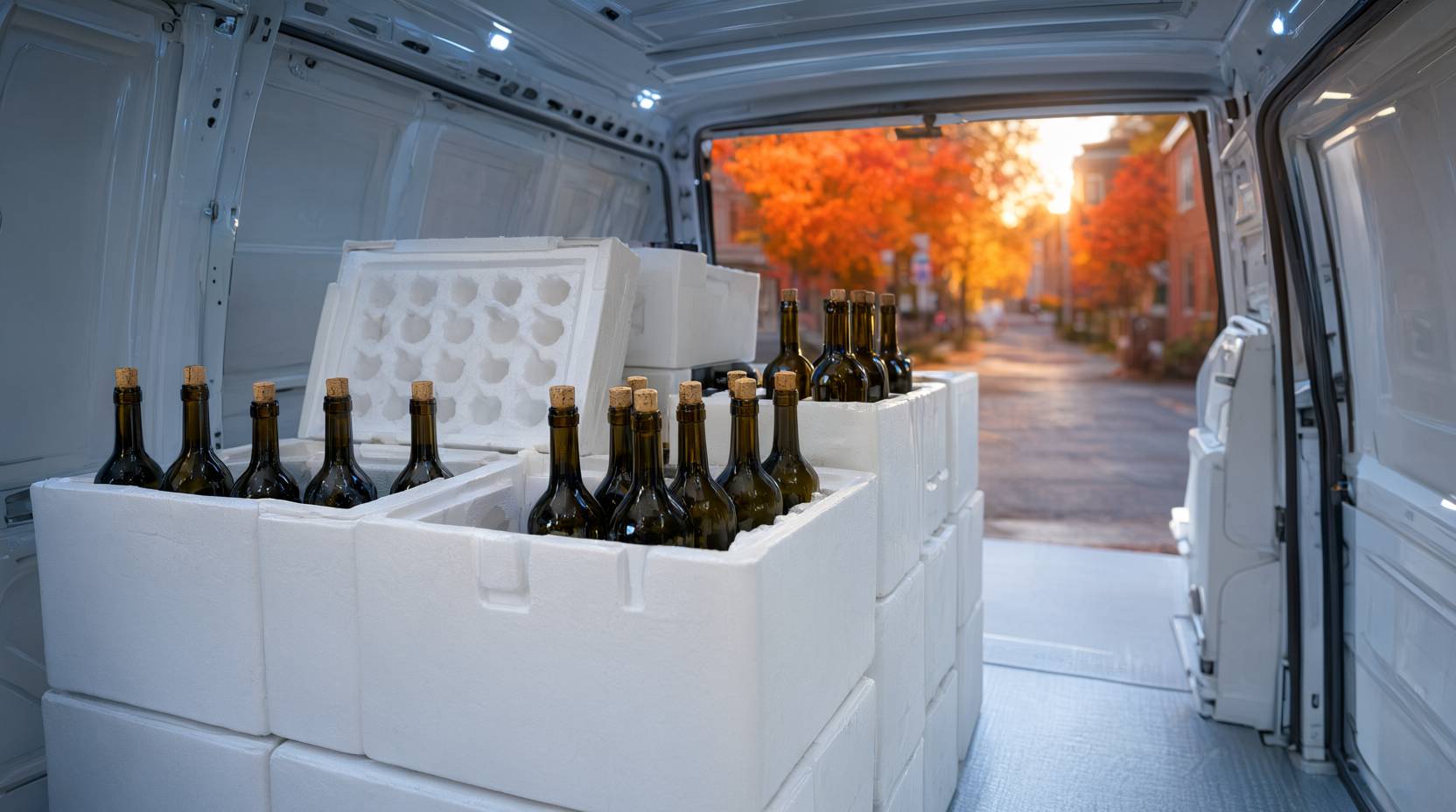
A bottle leaving Boston in July faces a very different trip than the same bottle leaving in October. Summer heat can build inside a parked truck or a warehouse dock, while January brings freezing stretches that stress corks and glass. Temperature controlled wine shipping exists to take that seasonal gamble off the table for bottles you cannot afford to lose.
For a few everyday bottles in mild weather, good packing may be all you need. For a cellar of age-worthy wines, the calculation changes quickly. The question is not whether wine shipping temperature matters, but how much exposure your shipment can tolerate.
What the Terms Actually Mean
Providers use temperature controlled, refrigerated and climate controlled almost interchangeably, but they are not identical. Refrigerated wine shipping usually means the cargo space is actively cooled, which helps in summer but may not address cold snaps. Climate controlled wine shipping generally implies a managed range that guards against both heat and cold.
Insulated packing is something else again. Foam or thermal liners slow temperature change but do not generate or hold a set temperature. Ask any provider to define the term they use and the range they aim to hold, rather than assuming.
A Quick Decision Checklist
Run your shipment through these factors before choosing a service:
- Bottle value: replacement cost or sentimental weight raises the case for controlled transport.
- Season: July through September and deep winter carry the most risk in New England.
- Transit time: every extra day in a truck or hub adds exposure.
- Dwell time: bottles often wait longest at pickup and delivery, not on the road.
- Age and style: older wines and delicate whites tend to be less forgiving of swings.
If two or three of these point to high risk, insulated parcel packing alone is probably the wrong tool. If most point to low risk, a well-packed shipment in a mild week can be reasonable.
Where Insulated Packing Still Works
Everyday bottles moving a short distance in spring or fall often travel fine in a sturdy shipper with proper dividers and a thermal liner. Timing helps as well. Shipping early in the week avoids weekends in a hub, and a confirmed delivery window keeps cartons off a hot porch.
Packing still matters even when the truck is controlled. Immobilized bottles, case-level labeling and a clear inventory protect against breakage, which temperature control does not prevent.
Questions to Ask a Provider
Vague promises are a warning sign, so get specifics in writing. Useful questions include:
- What wine shipping temperature range do you aim to maintain, and for which legs of the trip?
- How is temperature monitored, and can you share the record afterward?
- Who has custody at each handoff, and where do bottles wait between them?
- What does your insurance cover, and what documentation does a claim require?
- How do you handle a delay or a weather event mid-route?
No honest provider can guarantee an exact temperature at every moment of every trip. What you want is a clear plan, monitoring and accountability when something goes off schedule.
Plan Pickup and Receiving Too
Even the best transport can be undone by a pallet sitting on a loading dock. Stage bottles in a cool interior space before pickup, and have someone ready to receive and move them indoors on arrival. Reconcile the count against your inventory at both ends so any problem is documented right away.
If your cellar will not be ready when the bottles arrive, plan a bridge. A facility offering temperature-stable wine storage can hold the collection until your space is set, and wine inventory management keeps records clean through the handoff.
Choosing the Right Level of Protection
Start with the checklist, then match the service to the risk. Low-value bottles in mild weather can go in insulated parcel packing, while valuable or age-worthy collections moving in summer or deep winter deserve controlled transport with monitoring and documented custody.
At National Wine Transport, we handle wine moves for collectors, wineries, shops and restaurants across New England and beyond. If you are weighing options for a specific shipment, you can request a quote and describe the route, season and bottle count so the right level of protection is clear before anything leaves your door.