
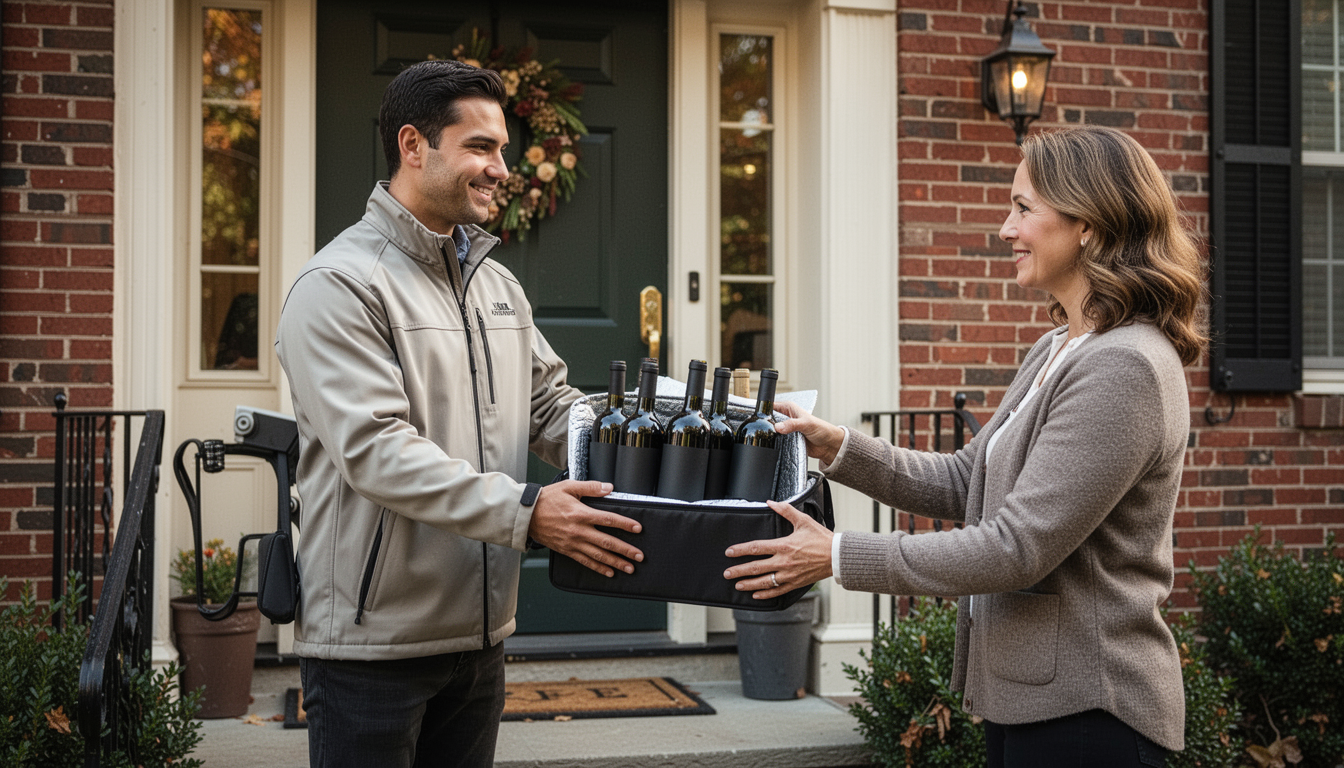
A wine courier can solve a very specific problem: getting bottles or a case from one accountable handoff to another at an agreed time. That makes courier service useful for local deliveries, gifts, restaurant replenishment, and short moves around Boston or Massachusetts. A search for wine delivery boston often means the sender needs a scheduled local handoff, not simply the fastest label available. It is not automatically the right answer for every route or shipment, however. The safest choice depends on distance, bottle value, weather, legal eligibility, and who can receive the wine.
What a wine courier actually does
A courier coordinates a pickup, protects the shipment during handling, and delivers it to a named destination. A well-run service confirms the pickup window, destination, bottle count, contact details, and receiving requirements before the driver arrives. It may offer tracking or direct status updates, but those features vary by provider and should be included in the service plan.
Courier delivery is usually strongest when timing and custody matter more than the lowest possible per-package rate. A Boston retailer sending a case to a nearby customer, a winery arranging a local order, or a collector delivering bottles to a tasting location may benefit from a scheduled handoff instead of a box moving through multiple carrier facilities.
When courier service is a good fit
- Local or regional routes: A short route around Boston, Framingham, Stoughton, or eastern Massachusetts can reduce transfers and make receiving easier to coordinate.
- Time-sensitive handoffs: A planned event, restaurant delivery, or appointment may call for a delivery window rather than an estimated parcel arrival.
- Small, valuable shipments: One bottle or a case may justify personal handling when a broken or delayed delivery would be especially disruptive.
- Known receiving conditions: The recipient can be present, verify the delivery, and follow any age or signature requirements that apply.
Ask how bottles are immobilized in the vehicle, whether the driver carries them upright or in another specified position, and how the shipment is protected from direct heat or freezing conditions. A courier does not automatically provide climate control, insurance, declared-value coverage, or compensation for spoilage. Confirm each item in writing before booking.
When a parcel carrier may be better
For a routine, legally eligible shipment traveling farther than a practical local route, parcel service may be more economical. Licensed shippers and approved carrier accounts can provide established labeling, tracking, and adult-signature processes. Requirements vary by origin, destination, shipper, and carrier, so do not assume that a personal box can be handed to a carrier without the correct account and documentation.
Weather planning still matters. A parcel route can expose wine to a warm loading dock, a cold trailer, or a weekend delay. Review temperature planning support for wine shipments, avoid shipping into a severe forecast when possible, and arrange a recipient who can accept the package promptly.
When dedicated wine transport is the better choice
A courier is not a substitute for collection relocation. Dozens or hundreds of bottles need an inventory, case-level packing, custody controls, route planning, and a delivery appointment. A dedicated wine transport and delivery solution can be built around the collection rather than treating it as unrelated parcels.
Before requesting a quote, reconcile the bottle count and values, identify fragile formats, note the pickup and delivery conditions, and disclose cellar stairs, loading limits, or storage needs. For a collection moving from New England to another state, ask whether the provider handles packing, weather holds, insurance terms, and receiving as one coordinated plan.
Compliance and receiving come first
Alcohol shipping rules differ across states, and a courier may not be authorized to carry or deliver wine on every route. Confirm that the sender, service provider, origin, destination, and recipient all meet the applicable requirements. In Boston and Massachusetts, treat a courier quote as a logistics proposal, not as legal advice or a complete state-by-state compliance determination.
Plan the final handoff before pickup. The recipient may need to show identification or provide an adult signature, and an unattended drop-off may not be allowed. Give the courier accurate contact information, keep the delivery window realistic, and inspect the outer packaging before accepting the bottles. Photograph visible damage and follow the provider's claim procedure immediately.
Questions to ask before booking
- Is the route and alcohol transaction eligible under the applicable rules?
- Who owns the shipment during pickup, transit, and delivery?
- What packing or vehicle protection is included?
- How are heat, freezing weather, delays, and failed delivery handled?
- Is tracking available, and who contacts the recipient?
- What insurance or declared-value terms apply to breakage and loss?
If your shipment also needs short-term holding before delivery, coordinate with a provider that offers secure wine storage. For recurring orders or a more complex route, review wine shipping and delivery support alongside the courier plan.
Choose the service around the handoff
The right wine delivery service is the one that matches the shipment to its risks. Choose a courier for an eligible, scheduled local handoff; consider parcel shipping for a properly prepared routine route; and use dedicated wine transport when a collection, long distance, or high-value custody plan demands more control. If you need help defining the route, request a wine shipping quote with the bottle count, origin, destination, timing, and receiving details.