
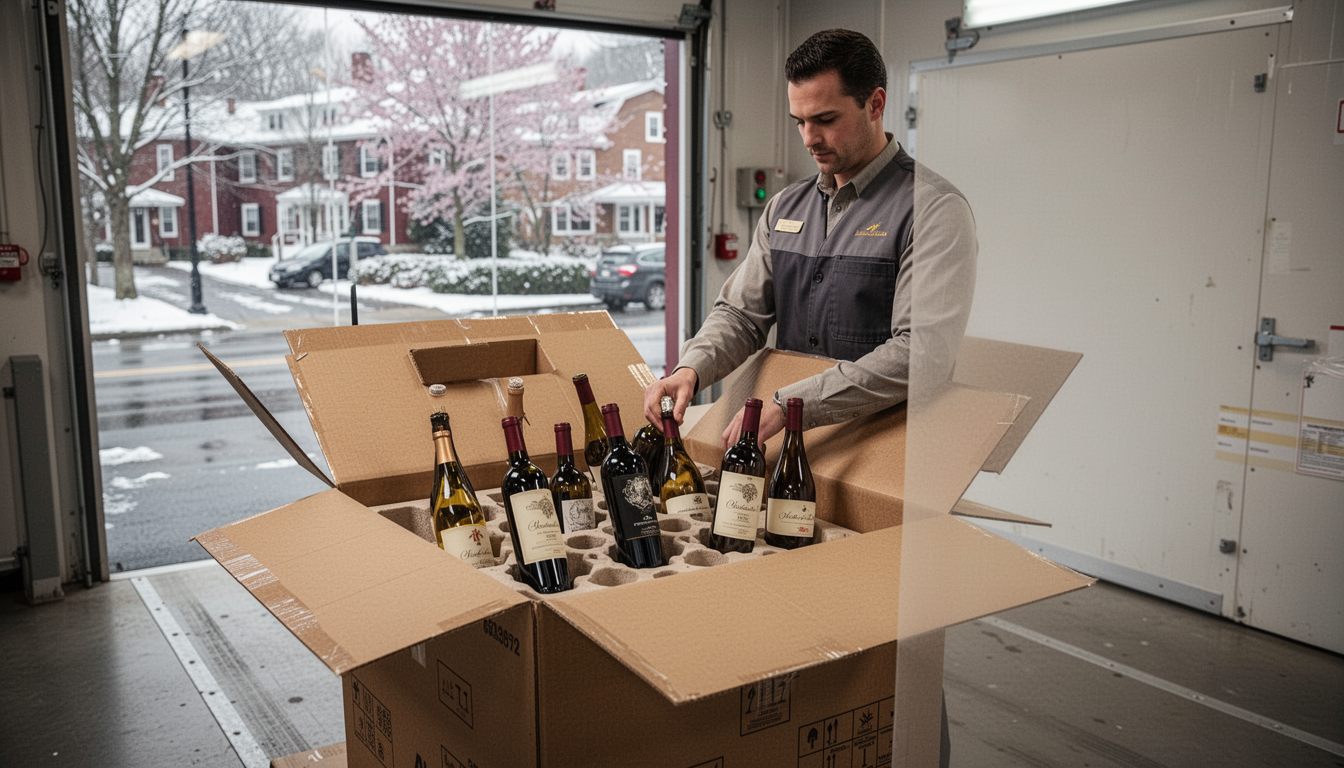
Wine delivery in Connecticut is not just a question of putting bottles in a box. A successful shipment depends on who is allowed to send it, whether the destination can receive it, how the bottles are protected, and whether the timing exposes the wine to damaging heat or cold. For a collector, gift sender, winery, or retailer, the right wine delivery service starts with those checks.
Start with the legal and delivery details
Before comparing prices, identify the sender, the recipient, the origin, and the exact Connecticut destination. Wine shipping regulations can vary based on the sender's license or business type, the destination state's requirements, and the carrier agreement being used. A shipment that is acceptable for a licensed winery may not follow the same process as a private collection move or a gift arranged through a retailer.
Confirm current requirements with the Connecticut Department of Consumer Protection and the federal Alcohol and Tobacco Tax and Trade Bureau before booking. Ask the provider which permit, tax, reporting, and labeling responsibilities apply to your shipment, rather than assuming that a carrier label supplies permission to ship. The recipient should also expect an adult-signature procedure where required, so an unattended delivery is not a reliable plan.
Match the service to the shipment
A standard parcel service can be appropriate for a compliant, well-packed case moving on a short route during moderate weather. It is less suitable when the shipment contains rare bottles, a mixed collection, unusual bottle shapes, or a long route with multiple handling points. The volume and value of the shipment should determine whether you need a carrier solution, coordinated wine delivery, or dedicated wine transport.
- For a small, ordinary shipment, ask about approved packaging, tracking, adult signature, and the carrier's alcohol policy.
- For a gift, confirm the recipient's address, delivery window, signature expectations, and what happens after a missed attempt.
- For a cellar or high-value collection, request inventory handling, condition documentation, declared-value terms, and a door-to-door plan.
If you are comparing options for a move from Boston or another Massachusetts origin into Connecticut, ask who controls pickup, staging, transfer, and final delivery. A provider that coordinates the full handoff can reduce the gaps that occur when a label is purchased without a clear receiving plan. You can review wine transport and delivery options before deciding which service level fits.
Protect the bottles before pickup
Good wine delivery depends on immobilizing every bottle, not simply cushioning the outside of a carton. Use a purpose-built insert or an approved wine shipping box sized for the bottle shapes, and leave no room for bottles to strike one another. The outer carton should be strong enough for the packed weight, securely sealed, and labeled according to the selected carrier's current requirements.
Inspect the packing plan for heavy bottles, magnums, sparkling wine, and odd-shaped glass before the shipment leaves. Keep the finished cartons out of direct sun and avoid leaving them on a loading dock or in an unconditioned vehicle. For valuable wine, photograph the bottle count, labels, closures, and carton condition at handoff so the inventory and any later claim have a clear starting record.
Plan around Connecticut weather
Connecticut and the wider New England region can move from winter freezes to summer heat quickly. Weather-aware scheduling may mean holding a shipment, choosing a faster route, using insulated packaging, or arranging a temperature-managed option when the forecast creates meaningful risk. There is no single temperature threshold that makes every shipment safe or unsafe, because bottle type, route, exposure time, and packaging all matter.
Ask who monitors the forecast and who has authority to place or release a weather hold. Confirm how long the wine can remain staged, how the recipient will be notified, and whether storage charges or a rebooking fee could apply. When comparing wine delivery new england options, choose a provider that explains these decisions before pickup, not after a box has already missed its ideal window.
Check insurance and receiving terms
Do not treat a carrier's declared value as automatic protection for collectible wine. Coverage, exclusions, proof-of-value requirements, and claim procedures are contract-specific, and some policies may not cover temperature damage, inadequate packing, or prohibited shipments. Request the terms in writing and ask whether the provider records condition at pickup and delivery.
The receiver should have a practical inspection plan. Check the carton for wet spots, crushed corners, broken glass, or leakage before signing when the delivery process allows it, then photograph any issue and notify the provider promptly. For a collection move, a bottle-by-bottle inventory makes receiving faster and gives both sides a useful record.
Choose with a shipment-specific quote
The most useful quote includes origin and destination, bottle count and formats, declared value, packing, pickup, delivery method, signature handling, weather protection, insurance terms, and expected timing. Avoid a quote that gives only a low per-box price while leaving compliance, storage, and exception handling unclear.
Whether you are sending one gift case from Massachusetts or moving a Connecticut cellar across New England, ask for a plan built around the actual bottles and route. For a detailed review of your shipment, request a shipment-specific quote. If storage and delivery need to work together, explore storage-connected wine shipping and delivery and the wine storage and shipping FAQ for related questions.