
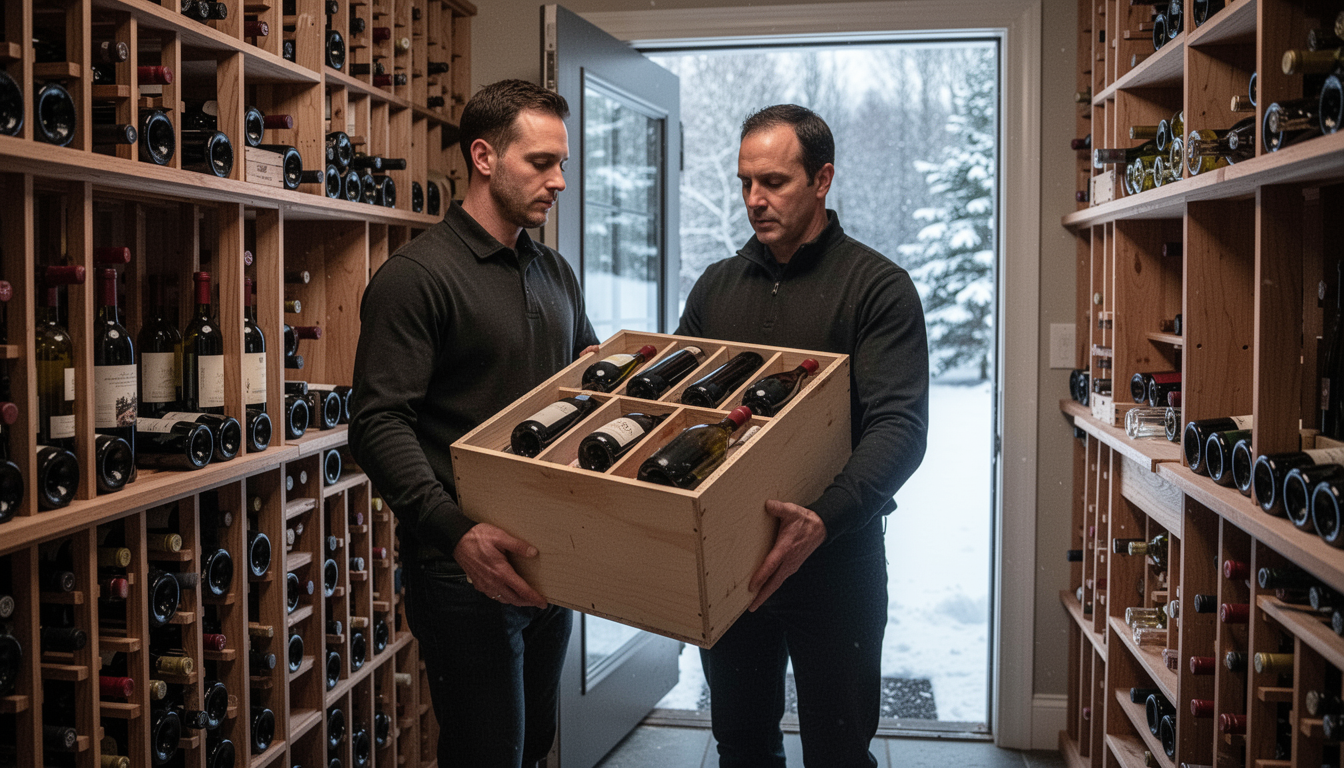
Choosing wine movers in New Hampshire is a different decision from booking ordinary household movers or sending a case through a parcel carrier. A cellar relocation may involve dozens or hundreds of bottles, mixed bottle shapes, valuable provenance, and a route that crosses New England or continues across the country. The safest plan treats the collection as controlled inventory from pickup through delivery, not as boxes added to a general moving load.
Start with an accurate collection record
Before requesting a quote, export or review your cellar record and reconcile it against the bottles on the shelves. Record producer, vintage, format, quantity, storage location, declared value, and any condition notes. Photograph labels and unusual packaging, then keep a copy of the final inventory with the person responsible for receiving the shipment.
This record gives a wine moving service New Hampshire details it needs to estimate labor, case count, packing materials, vehicle space, and handling requirements. It also creates a clear handoff record if a bottle is missing, damaged, or received with a visible change in condition.
Choose dedicated handling when the collection needs it
Parcel shipping can be practical for a small, properly packed shipment when the shipper, destination, and carrier process are eligible. It is less suitable when you need room-by-room pickup, bottle-by-bottle verification, coordinated storage, or one accountable team for a large collection. A dedicated wine transport New Hampshire plan can reduce transfers and let the provider schedule pickup and delivery around the collection rather than a standard delivery window.
Ask the provider how it handles mixed cases, oversized bottles, open cases, wooden crates, and bottles that should not be turned on their sides. If your move starts in New Hampshire and connects with Boston, Massachusetts, or another New England location, confirm who controls the shipment at each handoff. The wine transport and moving services overview can help you frame those questions before requesting a route-specific plan.
Pack for immobilization, not just cushioning
Good wine packing prevents bottles from shifting into one another. Use purpose-built cell dividers or molded inserts sized for the bottle, strong outer cartons or cases, and separate protection for magnums, Burgundy shapes, and irregular formats. Fill voids so a bottle cannot slide, but do not apply pressure to capsules, corks, or fragile labels.
- Group bottles by format and weight instead of forcing every shape into one case.
- Label each case with an inventory range and an upright or handling note when appropriate.
- Seal cases only after the count is checked against the collection record.
- Stage packed cases indoors, away from radiators, direct sun, and an open garage door.
Do not assume generic wine shipping boxes or a household moving carton provide enough protection for a long relocation. When a shipment includes storage before or after transit, coordinate the handoff with a facility that can explain its environment and access process. For that part of the plan, review wine storage for a planned collection handoff.
Plan around New Hampshire weather
New Hampshire winters can expose bottles to freezing conditions, while summer staging and vehicle interiors can create damaging heat. Ask about weather monitoring, pickup-day staging, protected loading, route timing, and whether the provider can hold the shipment when conditions are unsuitable. Temperature-control availability varies by service and route, so get the actual operating plan in writing rather than relying on a general “climate controlled” label.
For a wine cellar relocation, arrange access before the crew arrives. Clear stairs and paths, identify the loading point, and keep the inventory lead available to resolve questions. A weather delay is usually easier to manage than leaving packed bottles in an uncontrolled space.
Confirm custody, insurance, and delivery details
Ask where responsibility changes, how cases are counted at pickup, and what documentation accompanies each handoff. Review whether coverage addresses declared value, breakage, leakage, heat or freeze exposure, labels, and provenance, because policies differ and exclusions matter. Insurance should be confirmed before packing, not after a claim.
Destination readiness is part of wine collection relocation. Schedule an appointment, verify stairs, elevator access, parking, and receiving hours, and decide whether cases go directly into a cellar or into temporary storage. The request a route-specific wine moving quote page is the right place to provide bottle count, origin, destination, timing, access constraints, and special handling needs.
Use a documented receiving process
At delivery, compare case counts and seals with the pickup record before moving everything inside. Inspect outer cartons for crush damage or moisture, then check bottles with visible concerns while the delivery team is present. Photograph discrepancies, note them on the delivery document, and notify the provider promptly according to the agreed claims procedure.
A careful plan makes wine movers New Hampshire useful for more than transportation. It gives your collection a verified inventory, protected packaging, weather-aware movement, clear custody, and a controlled arrival, whether the destination is nearby in New England or across the country.