
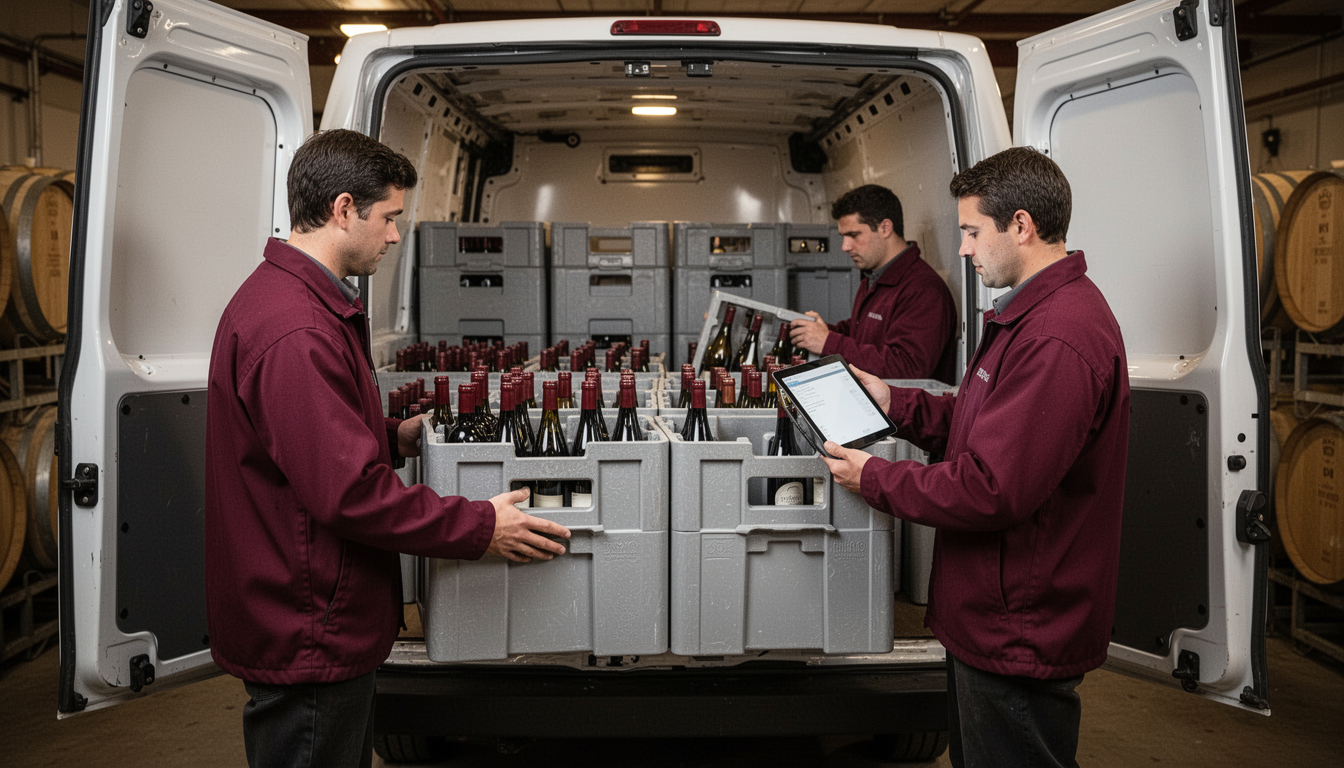
Planning wine transport in New England is different from sending an ordinary parcel. A collector moving a cellar from Boston to another state, or a retailer arranging a regional delivery, needs a plan for inventory, access, temperature exposure, legal eligibility, and the handoff at the destination. The goal is not simply to move boxes. It is to keep every bottle identified, protected, and accounted for from pickup through receiving.
Start with the collection, route, and pickup conditions
Before requesting a quote, reconcile the collection bottle by bottle. Record the number of bottles, case counts, approximate values, bottle formats, and any unusual shapes or large formats. An export from your inventory system can help, but compare it with the physical cellar so the packing plan and declared value reflect what is actually moving.
For a wine pickup Massachusetts plan, describe the pickup location in practical terms. Note the town, stairs, elevators, parking restrictions, loading docks, narrow driveways, cellar access, and whether bottles must be carried from a basement or moved through a finished home. Framingham, Stoughton, Boston, and surrounding communities can present very different access conditions. Clear details help a wine transport company assign the right crew, equipment, and vehicle.
Choose handling that matches the shipment
Dedicated wine transport is not the same as handing a case to a parcel carrier. A regional move may require case-level organization, protective inserts, reinforced outer cartons, palletization, or careful staging between pickup and delivery. Ask who packs the bottles, whether the shipment stays consolidated, and how exceptions are communicated if the route changes.
Wine shipping boxes should immobilize each bottle and prevent glass from contacting glass or the carton wall. Use packaging suited to the bottle shape and shipment size rather than assuming one box works for every format. For a larger cellar, label cases by inventory section or destination room and keep a matching case manifest for the receiving team.
Plan around New England weather
Seasonal timing matters across Massachusetts, Rhode Island, Connecticut, and New Hampshire. Heat, freezing conditions, and rapid temperature swings can affect wine before a vehicle leaves the driveway, while a shipment waiting on a dock or at a terminal may face exposure that the customer never sees.
Ask what weather monitoring, staging practices, and hold options are available for your specific route. Do not assume every shipment is temperature controlled or that a faster service automatically removes temperature risk. A sensible plan may include avoiding severe weather windows, using insulated packaging where appropriate, or holding the collection until conditions are safer.
Confirm compliance, insurance, and delivery details
Wine transport New England routes can cross several state lines, and rules may differ by origin, destination, sender, and receiver. Confirm current destination requirements before booking, including whether an eligible licensed party must arrange the shipment and whether an adult signature is required. A reputable provider should explain what it can handle and where you need additional confirmation, rather than promise universal coverage.
Review insurance terms in writing. Ask what value must be declared, what evidence supports a claim, whether breakage and temperature-related damage are treated differently, and what documentation is required. Coverage is only useful when the inventory, packing condition, and handoff records support it.
Delivery appointments are especially important for a collection. Confirm the delivery address, contact person, access instructions, receiving hours, and whether the destination has a suitable cellar or temporary storage area. If a storage handoff is part of the plan, coordinate it in advance with a provider offering secure wine storage and clear receiving procedures.
Inspect and reconcile at receiving
Have the recipient compare each case with the manifest before the crew leaves. Look for crushed cartons, wet packaging, broken glass, displaced bottles, damaged labels, and signs of unusual exposure. Photograph visible damage, note exceptions on the delivery record, and notify the transport provider promptly according to the claim instructions.
For wineries, retailers, and restaurants, the same discipline supports recurring regional moves. A consistent case-labeling system, scheduled receiving window, and documented exception process make wine movers New England easier to evaluate and easier to manage over time. If you are comparing a parcel option with dedicated service, review the differences in wine shipping and delivery before choosing.
What to include when requesting a quote
- Pickup and delivery cities, ZIP codes, and access conditions
- Bottle count, case count, formats, approximate value, and inventory file
- Preferred pickup window and any weather-related flexibility
- Packing, staging, storage, or room-placement requirements
- Delivery appointment details, signature needs, and receiving contact
- Questions about insurance, claims, route handoffs, and legal eligibility
When you are ready, use the request a wine transport quote form with these details. You can also review National Wine Transport's regional service approach before deciding which questions to ask. A complete brief lets the provider recommend an appropriate plan for wine transport Massachusetts and across New England, without treating a valuable collection like an ordinary box.